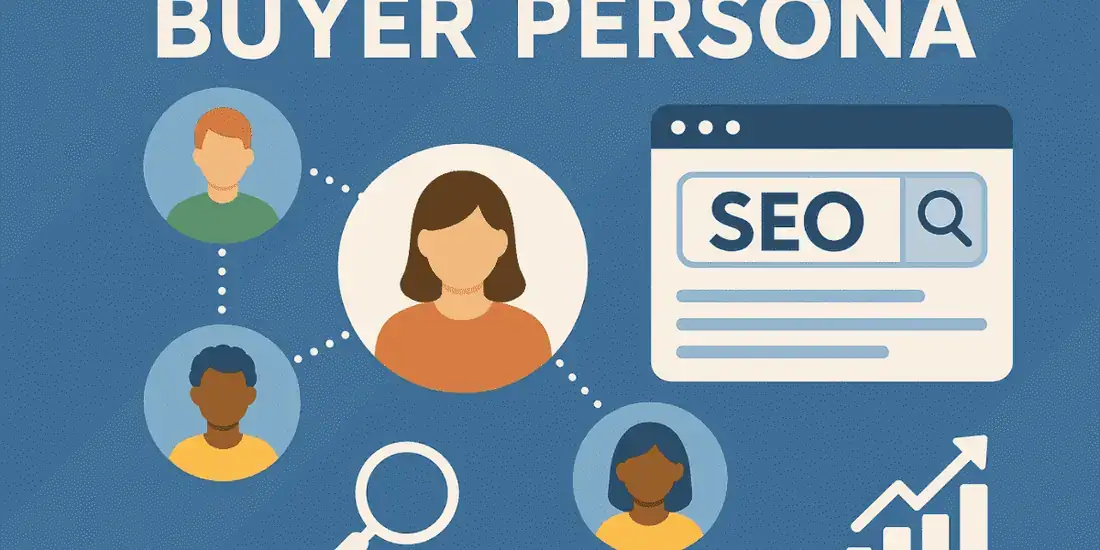
What is a buyer persona, and why does it matter for your business?
A buyer persona is a semi-fictional character that embodies your business's ideal customer. It's not simply a statistical summary, but a fully fleshed-out personality with real motivations, goals, challenges and behavior patterns. In essence, it's a tool that helps you put a human face on your data.
The value of well-crafted buyer personas is beyond question, and they bring the following business benefits:
- More targeted marketing: You'll know exactly who you're creating content for, in what tone, and which problems to address.
- More effective product development: You can build features and services based on real needs.
- A higher conversion rate: Your messages are far more likely to resonate with your audience when you understand their motivations precisely.
- A better customer experience: You can deliver a more personalized experience at every point of the customer journey.
According to HubSpot's data, businesses that base their marketing strategy on buyer personas can be up to 2–5 times more effective when it comes to targeted messages and offers. It's no accident that the most successful global brands, from Apple to Nike, develop extremely precise buyer personas.
Buyer persona vs. target audience: don't mix them up!
Before we go further, it's important to clear up a common misunderstanding. Target audience and buyer persona don't mean the same thing, even though many people use the two terms interchangeably.
Your target audience is a larger, more general group defined mainly by demographic traits (age, gender, location) and broader interests. For example: "women aged 25–40, living in big cities, with a higher education degree, who are interested in a healthy lifestyle."
A buyer persona, on the other hand, is a specific, fully fleshed-out personality that embodies a typical member of your target audience, complete with a name, personality traits, concrete goals and pain points. For example: "Health-conscious Emma, a 32-year-old marketing manager who lives downtown, works out regularly, but struggles with her schedule, and is looking for practical, time-saving healthy solutions for everyday life."
A given business typically has 2–5 different buyer personas that represent different segments of its target audience. Each one can be tied to its own content, message and even product development direction.
The 7 steps of creating a buyer persona
Building a model-customer profile calls for a systematic approach. The following seven steps walk you through the entire process, from the initial data gathering to the finished buyer persona, with practical advice for every phase.
1. Gather data on your existing and potential customers
Effective buyer persona creation is built on real, well-grounded data gathering. Avoid assumptions and stereotypes! Use the following sources:
- Analyzing your CRM database: Look at your existing customers' data, purchase history and feedback.
- One-on-one interviews: Run in-depth interviews with your most loyal and most valuable customers (even 5–10 interviews can be enough to start).
- Questionnaires and surveys: Use online questionnaires to gather data from a larger sample.
- Web analytics data: Analyze the user behavior you see on your website and social channels.
- Feedback from your sales team: The colleagues on the front line know a huge amount about your buyers' real motivations and questions.
- Competitor analysis: See which audiences your competitors are targeting and how they communicate with them.
It's important to gather both quantitative (measurable, quantifiable) and qualitative (deeper, descriptive) data, so you can get the full picture.
2. Define the demographic traits
Although a buyer persona goes far beyond simple demographic data, this is where you should start building. Define the following traits:
- Age (a specific number, not a range)
- Gender
- Type of location (big city, small town, rural area)
- Education
- Occupation, position
- Income bracket
- Marital status, number of children
It's worth giving your persona a name too, one that's usually alliterative and highlights a defining trait, such as "Practical Petra" or "Tech-obsessed Tom." A name makes it easier for your team to remember the persona and turn it into a relatable, human character.
3. Uncover behavior patterns and habits
Moving beyond the demographic foundations, the focus now shifts to the deeper, often more marketing-valuable behavior patterns that give you real insight into your target group's everyday life:
- Which online platforms do they use regularly? (E.g. Instagram and LinkedIn daily, YouTube weekly, TikTok rarely or not at all.)
- What types of content do they enjoy consuming? (E.g. industry podcasts on the commute, short explainer videos during the lunch break, longer blog posts on the weekend.)
- How do they gather information before buying? (E.g. they ask friends for recommendations, browse product-comparison sites, watch YouTube review videos, read forums.)
- How often do they shop online vs. offline? (E.g. clothing mainly in stores, electronics exclusively online, groceries via a weekly online shop.)
- What brand preferences do they have in other areas? (E.g. they prefer eco-conscious household products, they favor premium sports brands.)
- How do they spend their free time? (E.g. running 2–3 times a week, watching series on streaming services, monthly board-game nights with friends.)
- What values guide their decisions? (E.g. sustainability matters more than price, or only value for money counts, time savings vs. cost efficiency, quality vs. quantity, genuine uniqueness vs. mainstream fashion.)
After the COVID-19 pandemic, tracking the changes in online and offline behavior became especially important, since many consumer habits fundamentally shifted. Adidas, for example, specifically updated its buyer personas after the pandemic, taking into account the rise of working out at home and the changes in digital shopping habits.
4. Identify goals and motivations
What really drives your buyers? Why are they looking for your product or service? Define:
- Their short- and long-term goals
- Their professional ambitions
- Their personal aspirations
- Their internal motivations (security, recognition, self-fulfillment, etc.)
- What do they want to achieve with the help of your product/service?
LEGO is a great example of how to build on motivations: with the buyers of their toys, they identified not only the goal of entertaining children, but also the parents' motivations of spending quality time together, developing creativity and feeling nostalgia. Taking this further, they launched their "Adults Welcome" campaign and premium product lines aimed at adults, such as the LEGO Botanical Collection of flowers and plants, or the LEGO Architecture series with iconic buildings (the Sydney Opera House, the Empire State Building, etc.), which build directly on adults' motivations for relaxation, decoration and creative self-expression. In doing so, they successfully transformed LEGO from a children's toy into a creative platform relevant to every age group.
5. Uncover pain points and challenges
What dilemmas, obstacles and worries does your potential buyer struggle with? Knowing these is essential, since your business's offer is precisely the solution to these problems.
- Professional challenges
- Everyday difficulties
- Fears and worries
- Obstacles that hold them back from reaching their goals
- Previous negative experiences with similar products/services
Spotify makes excellent use of user pain points: they recognized that listeners were frustrated by ads, found it hard to discover new music, and didn't want to give up listening in offline situations either. The premium subscription model offers a solution to exactly these pain points.
6. Map the buyer journey and information sources
How does a potential customer get from recognizing their problem to buying your solution? At each phase they rely on different information sources and look for answers to different questions:
- Awareness phase: How do they recognize the problem or need? Which sources do they turn to in general?
- Consideration phase: Which solution options are they weighing up? How do they compare the alternatives?
- Decision phase: What's the final push that tips them toward buying? Whose opinion do they trust at this stage?
Mapping the buyer journey is extremely useful for planning your marketing communication. Decathlon, for example, built its "expert content" strategy on this basis, helping athletes with informative, educational material in the early stages of the buyer journey, while in the decision phase it focuses on concrete product benefits and comparisons.
If you'd like to go deeper into content development, read our related article: Content development – a guide to SEO-friendly copy.
7. Build a lifelike character
Based on the information you've gathered, you can now put together the complete buyer persona. An effective persona document usually contains the following elements:
- A visual element: A representative photo or illustration that helps humanize the persona
- Name and short introduction: "Practical Petra, a 34-year-old marketing lead who strives for efficiency and time savings"
- Detailed profile: A structured presentation of the demographic, behavioral and motivational data you've collected
- Quotes: Typical things the persona might say ("I don't have time to spend hours searching online, I'm looking for a solution that's proven to work. When I compare two products, I always check the reviews first. It drives me crazy when a webshop hides the shipping costs and the price only shows up at checkout.")
- A day in their life: A short description of what a typical day looks like for them
Netflix is especially successful at personalization: it uses more than 2,000 micro-personas based on viewer habits, which allow it to make highly personalized content recommendations.
Buyer personas in practice: how to use them
Creating buyer personas is only the first step, the real value shows up when you actively build them into your everyday business decisions and processes. You can use them across different areas of your business, but in the long run it's worth managing them at a strategic level, because the real value unfolds when a persona-based approach runs through the way the entire business operates.
Content development and marketing communication
With properly developed buyer personas, you can make your content development and communication strategy more effective. Instead of speaking in general terms, you can send exactly the message that resonates most with your target audience:
- You can pin down which topics and problems genuinely interest your audience, and focus on those during content development
- You can choose the most fitting tone and style for each persona, while one group values a professional, factual approach, another may respond better to a direct, personal voice
- You can make more deliberate choices about the content format, selecting between videos, blog posts, infographics, podcasts and e-books based on each persona's consumption habits
- You can time your communication more precisely to fit your target group's daily routine (e.g. morning newsletters for early risers, evening content for late-night browsers)
- You can pick the most effective channels for reaching each persona, whether that's social media, email marketing or industry forums
The New York Times uses buyer personas extremely effectively in its content strategy, tailoring content formats to different reader groups, for example, developing short, to-the-point newsletters for the "busy professionals who want to get informed fast" persona.
Product development
With carefully built personas, you can steer product development more effectively too, so you really create the features and solutions your audience needs.
- Identify real user needs
- Prioritize the features to develop
- Test new ideas with the right target group
- Develop targeted solutions for specific problems
Airbnb is a successful example of how buyer personas can be used in product development: based on the "Safety-conscious Sara" persona, they developed enhanced safety features after identifying that many potential users (mainly women) didn't feel the concept was safe enough: they had reservations about staying in the home of strangers.
Sales strategy
Buyer personas are especially valuable for the sales team, since they help you build a personalized approach for every type of potential customer, significantly increasing your conversion rate and the number of successful deals:
- Create sales scripts tailored to each buyer type
- Get ahead of the typical objections
- Focus on the benefits that matter most to a given persona
- Time your sales outreach properly
Salesforce is a great example of how to put buyer personas at the center of the sales process: they create demos and sales materials tailored to different personas, highlighting the features and benefits that matter most to that particular buyer type.
When should you update your buyer persona profiles?
Buyer personas aren't set in stone, they need regular review. As the market environment, consumer habits and your own business keep changing, you need to keep your personas up to date too, so they continue to give a true picture of your audience. Static personas, left unchanged for years, gradually lose their relevance and can mislead your marketing decisions. It's worth updating them along the following guidelines:
- At least once a year as part of a general review
- In the event of significant market changes
- When launching a new product or service
- If buyer habits or preferences change significantly
- When the data shows that your existing personas are no longer effective enough
Adobe follows an exemplary practice: they review their buyer personas quarterly and regularly test their validity with A/B tests and user feedback.
Common mistakes when creating buyer personas
Finally, here are a few typical mistakes worth avoiding when building and using buyer personas. These pitfalls often trip up even experienced marketers, and can significantly reduce the effectiveness of your personas. Recognizing and eliminating the following mistakes helps you use buyer personas as the genuinely useful tool they're meant to be:
- Traits that are too general: A "30–45-year-old woman with a higher education degree" isn't a persona yet, be more specific!
- Too many personas: To start, 2–3 well-developed personas are enough, too many will only spread your resources thin.
- Building on assumptions alone: Always base personas on real data and research, not just your gut feeling.
- Static personas: Personas need to be updated regularly, they aren't set in stone.
- Isolating your personas: Share them with your entire team, from the developers to customer support.
Start building your buyer persona profiles now
Creating buyer personas isn't a one-off task, it's a continuous, iterative process that helps you understand your customers more deeply and communicate with them more effectively. Detailed, data-driven buyer personas lay the foundation for a successful digital strategy, including search engine optimization (SEO).
As digital marketing evolves, the importance of personalization only grows. The businesses that truly understand and speak to the human side of their customers gain a significant edge over their competitors.
Don't forget that behind every persona there are real people with real problems and desires. Your goal isn't just to segment your buyers, but to build empathy, to understand more deeply how you can help them reach their goals.
Next steps
Ready to create your own buyer personas? Start with data gathering and follow the steps above. If you need help or would like a deeper analysis, our experts are here for you.
Want to read about related topics? Check out our other articles:
- SEO basics – What is SEO?
- The impact of digital marketing on business visibility
- Keyword research
- 10 tips for choosing an SEO agency